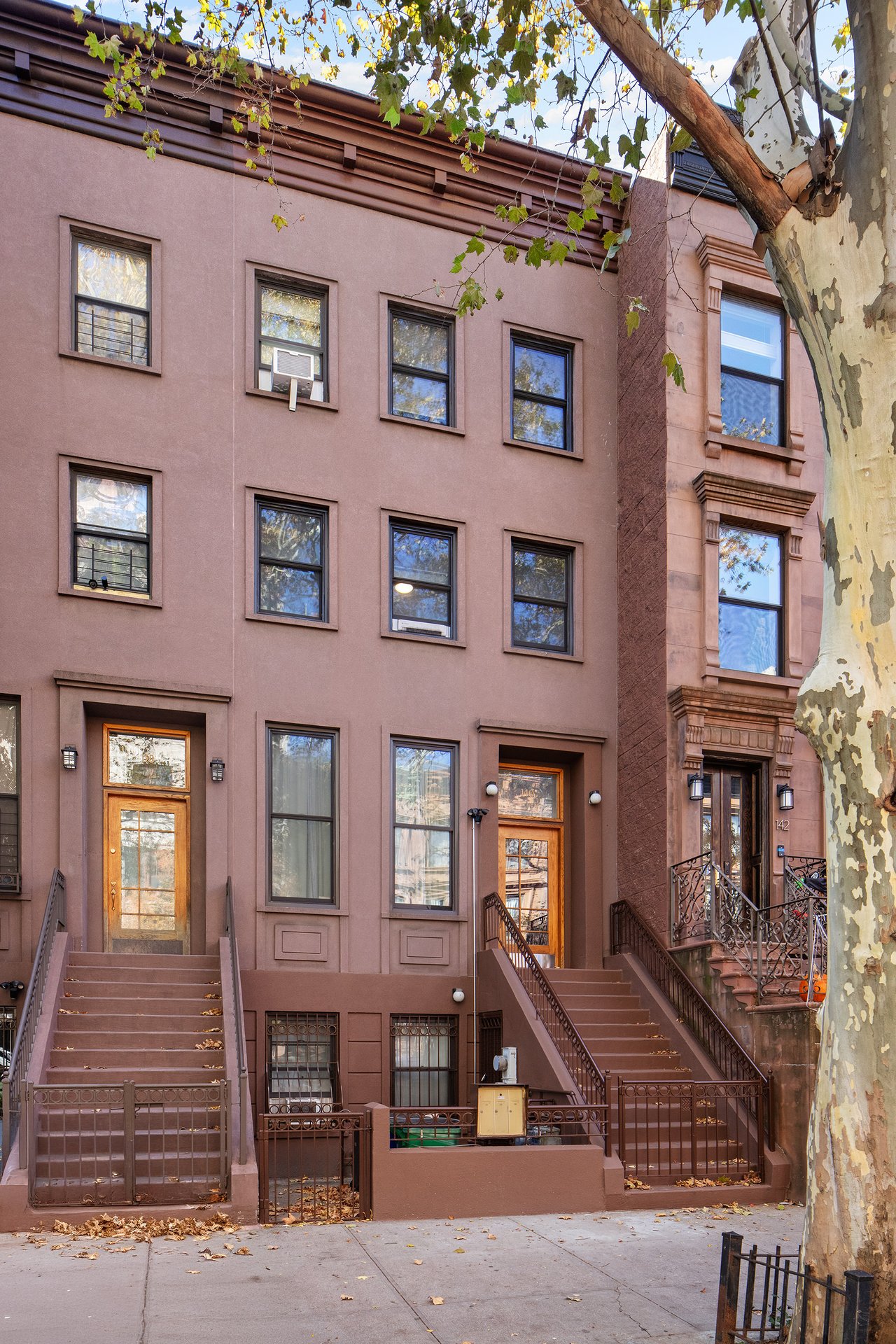
Some properties are defined by their square footage. Others are defined by their street. 140 West 132nd Street belongs to a rare third category defined by history itself. Located within the officially designated Central Harlem – West 130th–132nd Streets Historic District on the storied block known as the Lafayette Brownstones, this 18-foot-wide, three-unit, free-market multifamily is as much a cultural landmark as it is a real estate opportunity.
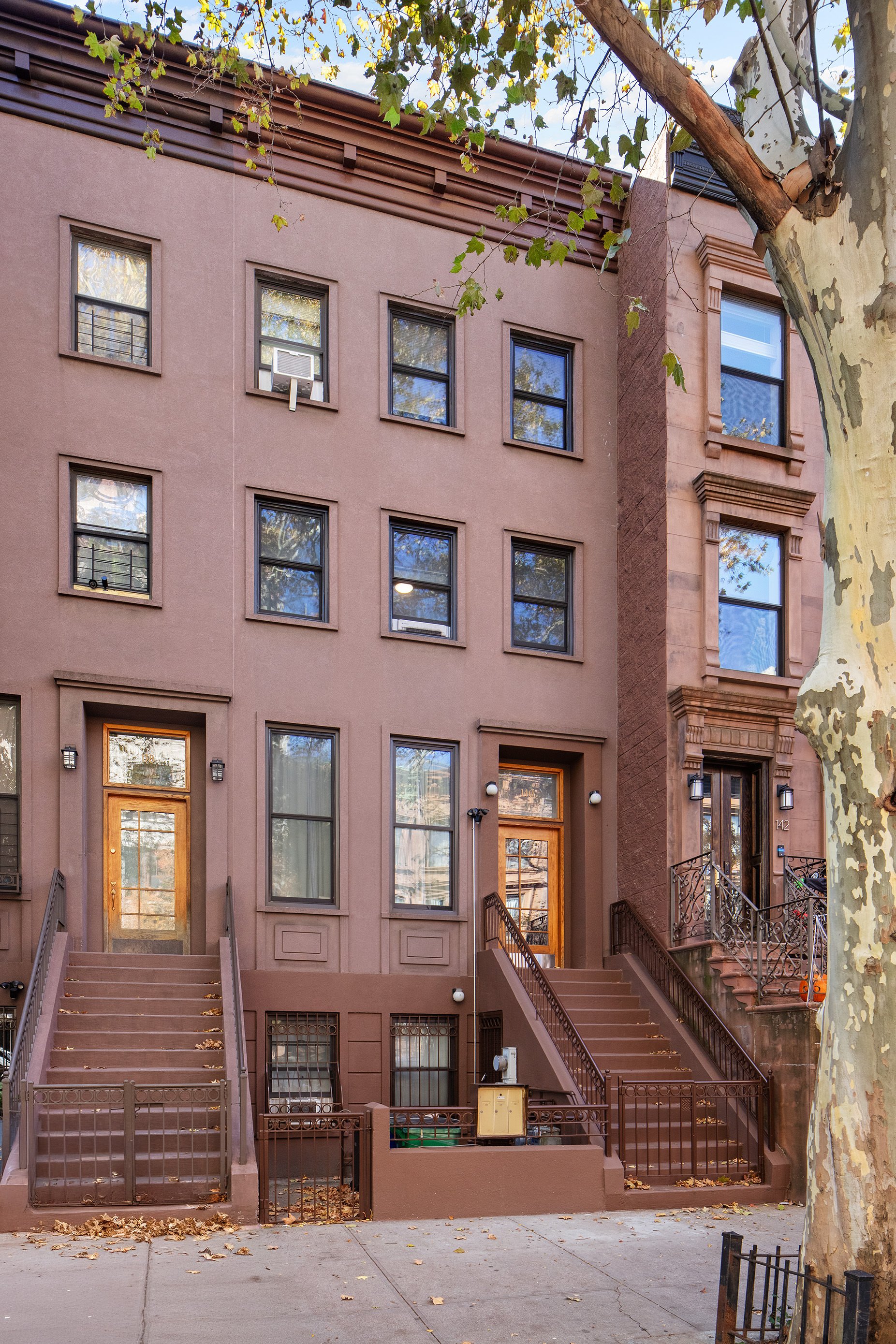
The Property
The building offers three generously sized, free-market residential units on an 18′ × 100′ lot (R7-2 zoning), with 3,780 square feet of living space across three stories.
Unit 1 : Garden & Parlor Duplex (3BR / 2BA)
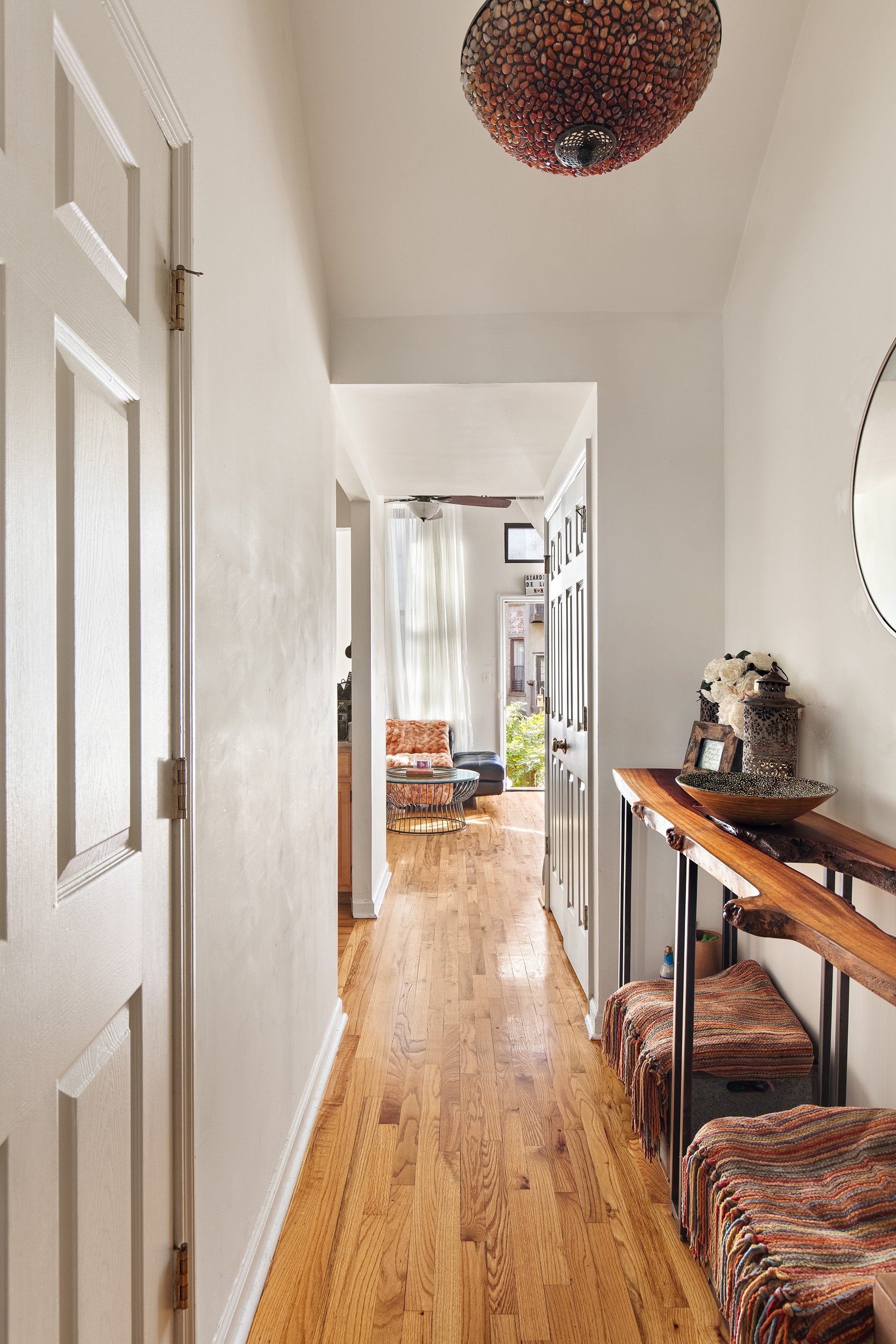
The anchor unit spans two levels with three king- and queen-ready bedrooms, two full bathrooms, in-unit laundry, and refinished hardwood floors. An open kitchen with stainless steel appliances flows into the living room, and a private rear yard and basement access add rare utility for Manhattan.
Units #2 & #3: Upper-Floor One-Bedrooms
Both upper units are bright, spacious one-bedrooms. Unit #3 has been fully renovated, featuring stainless steel appliances, white cabinetry, tiled bath, and refinished hardwood.
The Central Harlem Historic District
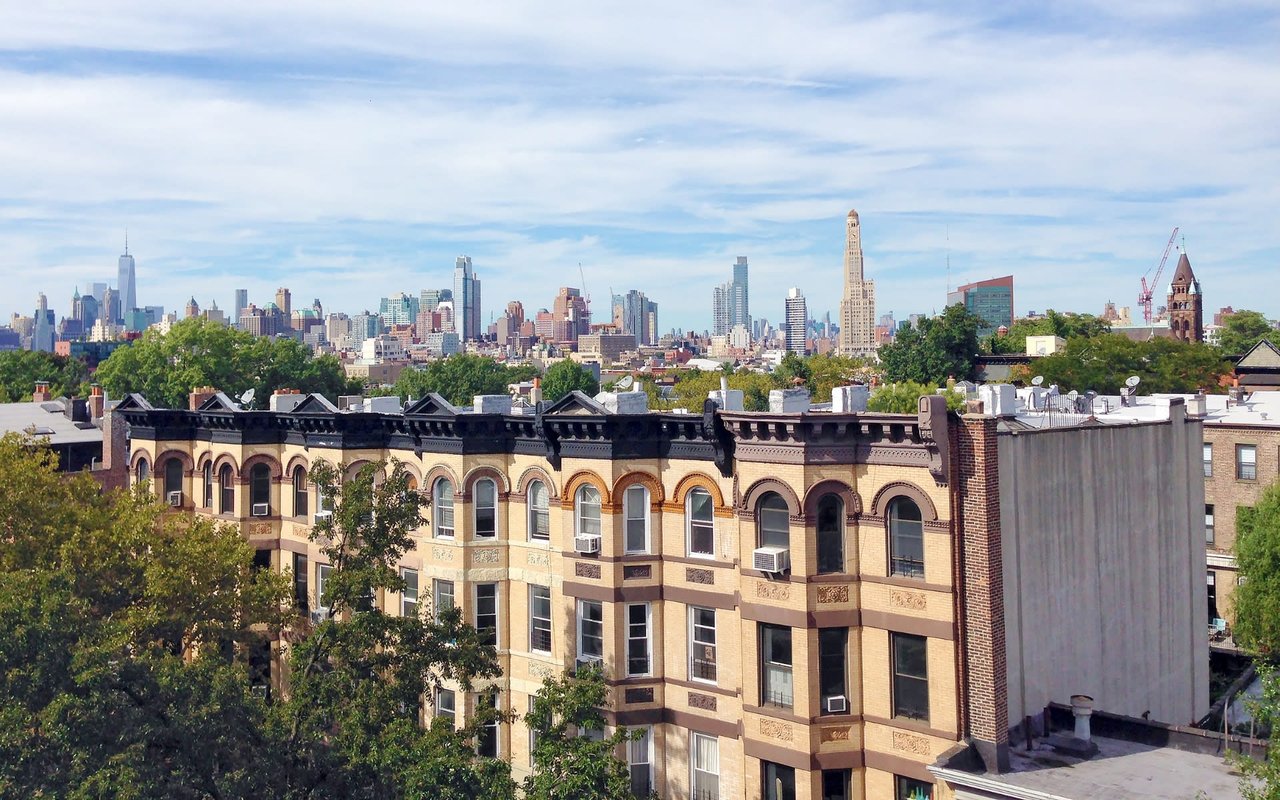
In May 2018, the NYC Landmarks Preservation Commission (LPC) officially designated the Central Harlem West 130th–132nd Streets Historic District, covering approximately 164 buildings between Malcolm X Boulevard and Adam Clayton Powell Jr. Boulevard. The designation recognizes the block's cohesive collection of neo-Grec, Queen Anne, Renaissance Revival, and Romanesque Revival brownstones and, equally, the extraordinary social and political life that took place within them.
Notable addresses in the district include the New Amsterdam Musical Association (the oldest continuously operating Black musical organization in the U.S.), the home of Scott Joplin, Friendship Baptist Church (a civil rights anchor), and the National Headquarters for the March on Washington. The organizing base for the movement that helped pass the Civil Rights Act of 1964. Landmark status protects this block from out-of-scale development, a direct and durable advantage for property values.
The Lafayette Brownstones: A Name Born from Harlem's Greatest Stage
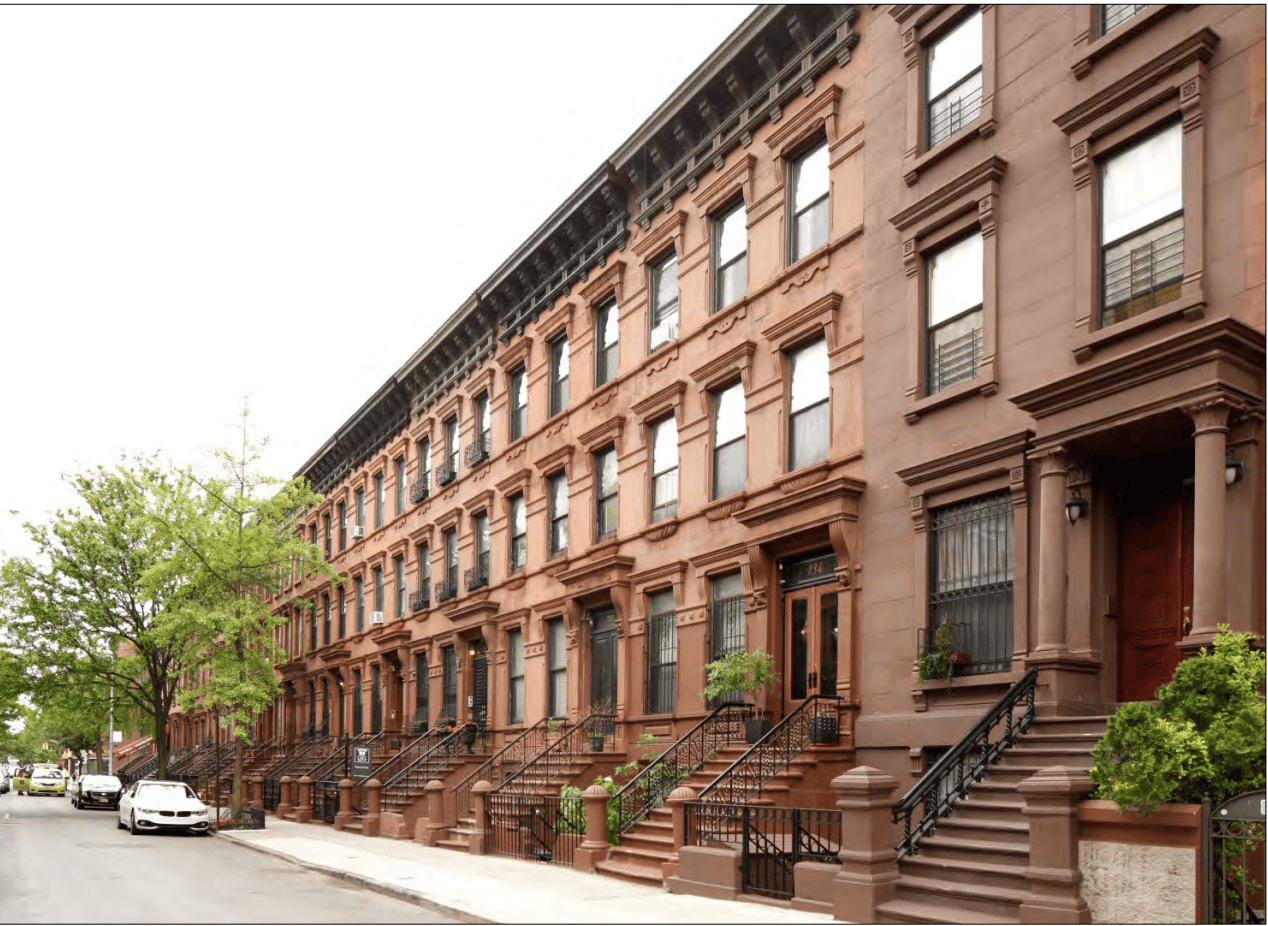
The brownstones of West 132nd Street carry a singular identity rooted in one address: the Lafayette Theatre, which stood at the corner of 132nd Street and 7th Avenue (now Adam Clayton Powell Jr. Boulevard), literally steps from this property.
Opened in November 1912, the 1,500-seat Lafayette was designed in the Renaissance style and quickly earned the nickname "The House Beautiful." In 1913, it became the first major theater in New York City to desegregate, allowing Black patrons to sit in orchestra seats, a radical act of dignity that sent ripples across the nation. The Lafayette Players became the first legitimate Black stock company in Harlem, launching careers that would reshape American theater.
"The Lafayette didn't just entertain Harlem, it defined it. Duke Ellington made his New York debut here. Orson Welles staged his legendary Voodoo Macbeth here. The block outside your door was once called the Boulevard of Dreams."
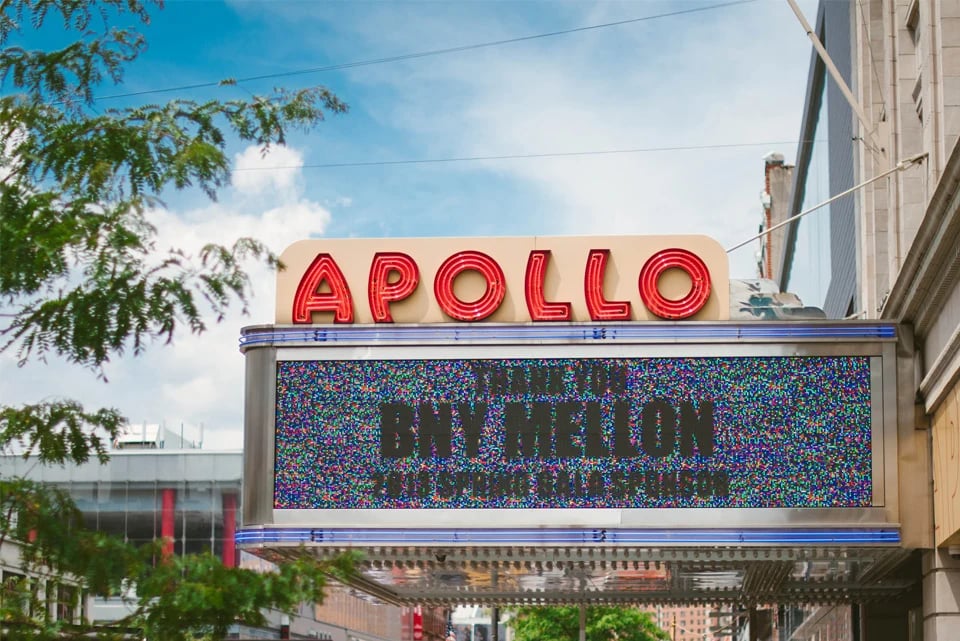
In 1923, a young Duke Ellington made his New York City debut at the Lafayette. He returned in 1927 alongside Adelaide Hall, premiering Creole Love Call for the first time. Orson Welles and John Houseman staged their celebrated "Voodoo Macbeth" here in 1936 under the Federal Theatre Project. It moved from Harlem to Broadway to a national tour. The stretch of 7th Avenue in front of this property was known as the Boulevard of Dreams, home to a legendary elm tree touched by Ethel Waters, Eubie Blake, and Fletcher Henderson for good fortune, a piece of which now lives at the Apollo Theater, where performers still touch it today.
Investment Analysis
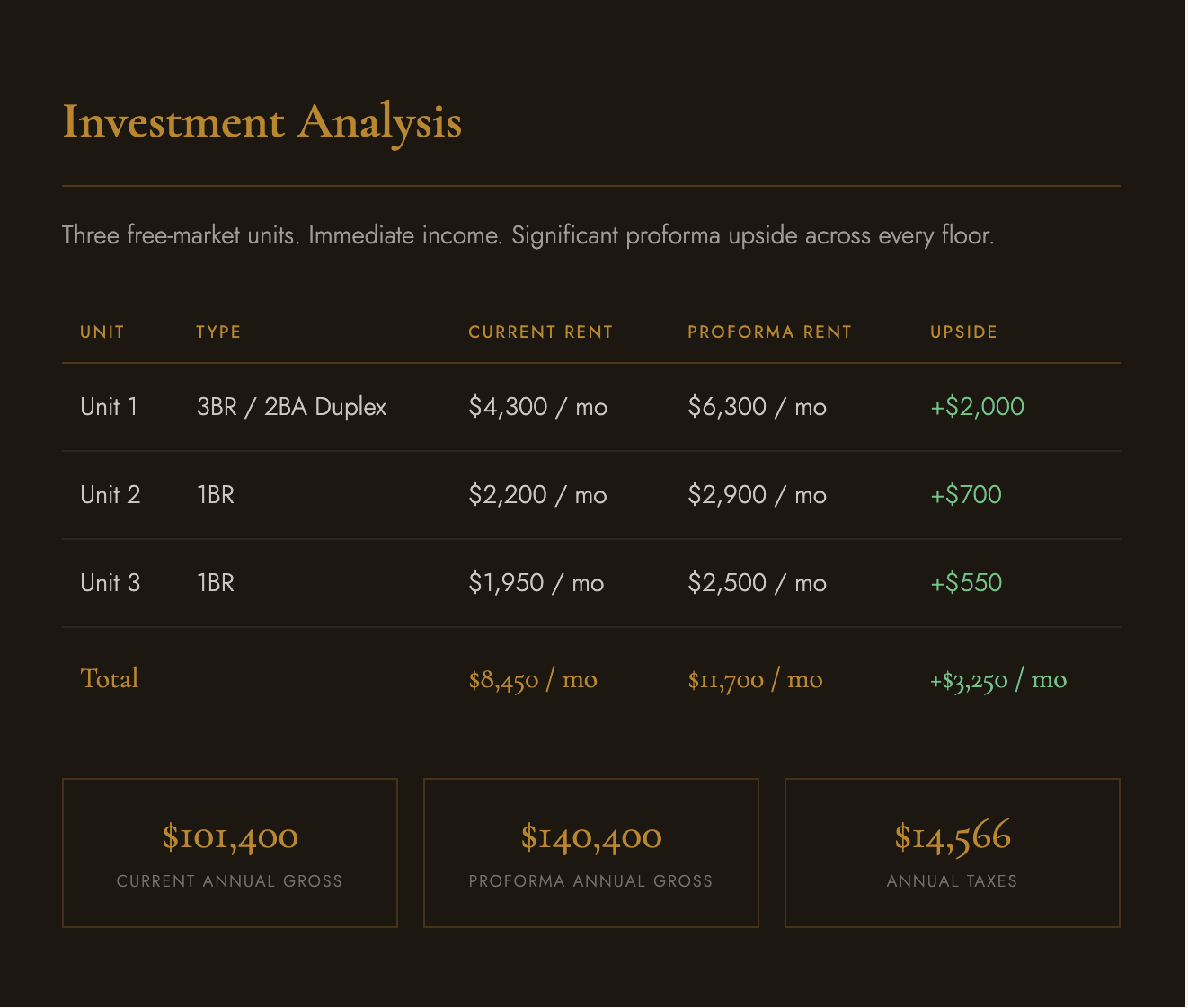
At $2,600,000, the pro forma Gross Rent Multiplier is approximately 18.5×, compelling for a landmarked Manhattan multifamily. The price per unit is $866,667, and the price per square foot is $688. The $3,250/month proforma gap translates to $39,000 in additional annual income simply by bringing rents to market at natural lease turnover, no renovation required.
Beyond rent optimization, the building supports four exit strategies: continued income property, single-family conversion, luxury condo conversion leveraging FAR potential under R7-2 zoning, or owner-occupancy with the duplex as a primary residence while the two upper units offset carrying costs.
Location & Transit
Direct access to the 2 and 3 express subway lines makes Midtown Manhattan a 15-minute ride. The immediate neighborhood offers some of Harlem's most celebrated dining options, including Red Rooster, Ponty Bistro, Maison Harlem, Lido, and Renaissance Harlem, as well as a growing cultural and retail scene that continues to attract both residents and investment. This is prime Harlem, on a landmark block, with the subway at your door.