What Living in Jackson Heights Is Really Like
May 7, 2026
May 7, 2026
Wondering what it’s really like to live in Jackson Heights? This Queens neighborhood offers a rare mix of fast transit, globally influenced food, and housing with real architectural character. If you are trying to decide whether Jackson Heights fits your lifestyle, this guide will help you understand the streets, homes, and day-to-day experience so you can make a more informed move. Let’s dive in.
Jackson Heights stands out for its density, diversity, and constant street activity. New York City’s commercial district assessment describes a neighborhood of roughly 77,000 residents, with 64% of residents foreign-born and a population that includes Hispanic or Latino, Asian, White, and African American residents. The same city report notes that around 160 languages are spoken here, which helps explain why the area feels so active and layered from one block to the next.
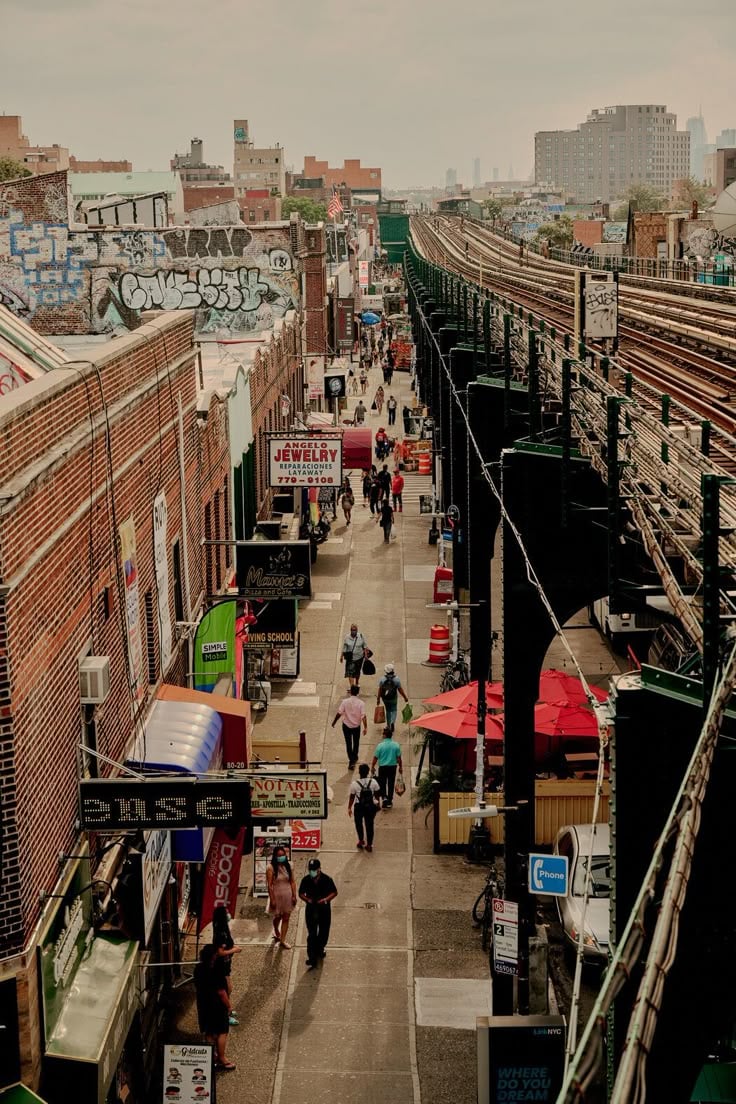
Much of that energy centers on the 74th Street and Roosevelt Avenue hub. Roosevelt Avenue and 37th Avenue extend that activity toward 82nd Street, creating a broad commercial area with heavy foot traffic. In practical terms, you get a neighborhood that feels busy, connected, and very much part of the daily rhythm of New York City.
One of the most important things to know about Jackson Heights is that the atmosphere changes quickly depending on where you stand. According to the city’s assessment, Roosevelt Avenue is crowded with pedestrians, bikes, vehicles, and buses, and the elevated tracks can make parts of the corridor feel darker. A few blocks away, 37th Avenue is described as a comparatively pleasant streetscape.
That block-by-block variation matters when you are choosing a home. If you want immediate access to trains, buses, shops, and restaurants, living near the main transit and retail corridors may be convenient. If you prefer a calmer residential setting, it is worth paying close attention to side streets and quieter stretches of the neighborhood.
Jackson Heights also benefits from notable public space projects. Diversity Plaza adds pedestrian-friendly open space, 78th Street Plaza provides about 10,000 square feet of plaza space, and 34th Avenue is being transformed into New York City’s first permanent Open Street. For many residents, these spaces create breathing room in a neighborhood known for its intensity and movement.
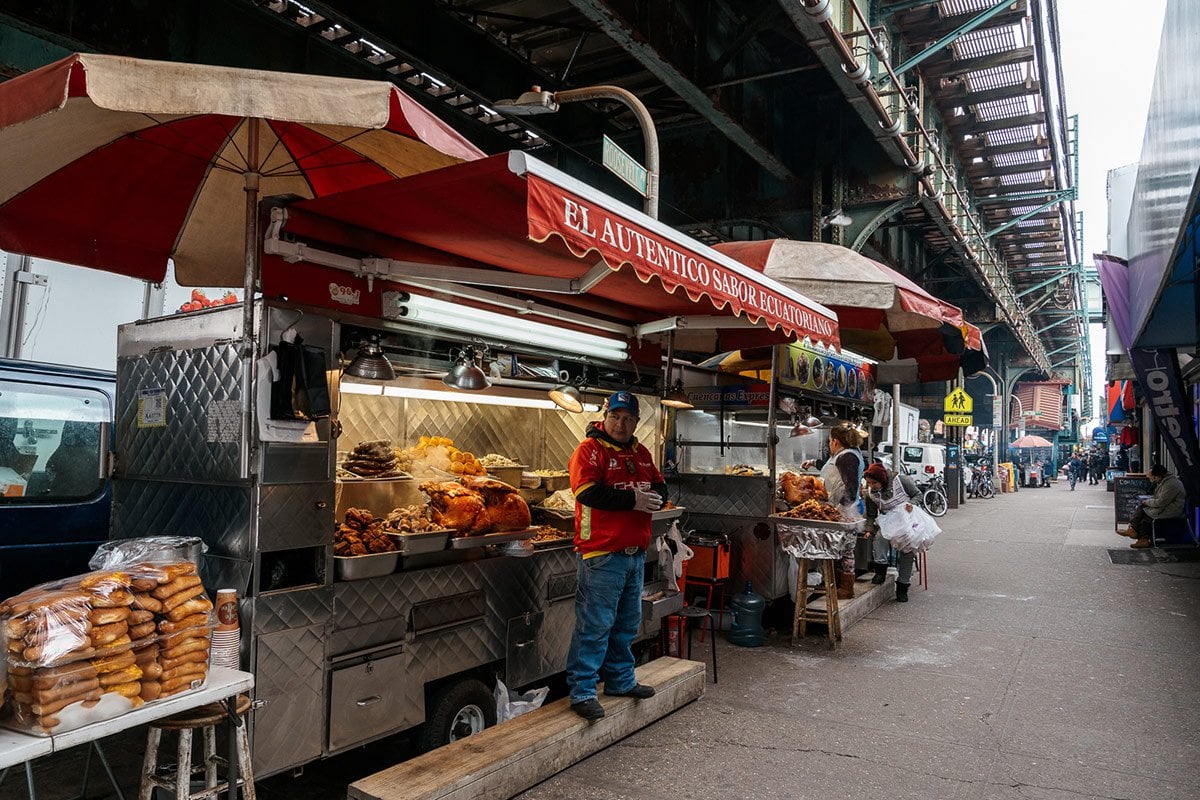
Jackson Heights has earned a reputation as one of New York City’s strongest neighborhood food destinations. A 2025 neighborhood dining guide highlights Mexican, Nepalese, Bangladeshi, Tibetan, Colombian, Ecuadorian, Italian, Lebanese, and Uruguayan cuisines, as well as food trucks and street food. That range is one of the clearest signs of how international the neighborhood feels in everyday life.
The city’s commercial district assessment adds even more detail. It identifies 74th Street as the heart of Queens’ Little India, with South Asian businesses extending to 72nd and 73rd Streets along Roosevelt and 37th Avenues. Roosevelt Avenue is also known for Mexican, Ecuadorian, and Peruvian restaurants, and street vending is common throughout the district.
For you as a buyer or renter, the food scene is more than a nice bonus. It shapes how the neighborhood lives and breathes. You are not looking at a place defined by one signature restaurant row, but at a dense network of everyday, often affordable, immigrant-run food options spread across major corridors.
One reason Jackson Heights feels so convenient is that its food culture and transportation network overlap. The busiest dining and shopping strips are close to some of the neighborhood’s strongest subway and bus connections. That means errands, quick meals, and commuting can all happen within the same few blocks.
If you like neighborhoods where daily life happens on foot, Jackson Heights offers that experience in a big way. You can step out for groceries, snacks, takeout, or a sit-down meal without planning your whole day around the trip. For many people, that kind of access becomes one of the biggest lifestyle advantages of living here.
Jackson Heights is one of the most transit-rich neighborhoods in Queens. The 74 St-Broadway and Jackson Hts-Roosevelt Av complex serves the 7, E, F, M, and R trains, and the MTA lists ADA-accessible service at 74 St-Broadway. There is also a separate 82 St-Jackson Hts stop on the 7 line, which gives residents another rail option depending on their exact location.
Bus service adds even more flexibility. The MTA lists connections at 74 St-Broadway, including the Q18, Q47, and Q60, and the Q47 goes to LaGuardia Airport. The Q70 SBS also serves the 74th Street and 61st Street stops, which can be especially useful if airport access is part of your routine.
For trips into Manhattan, the Q32 route connects Jackson Heights to Penn Station, with stops that include 82nd Street and Northern Boulevard, Roosevelt Avenue and 74th Street, Roosevelt Avenue and 61st Street, Queens Plaza East, East 60th Street and 2nd Avenue, and West 32nd Street and 7th Avenue. In real life, that means you often have more than one way to get where you need to go. Instead of relying on a single line, you can often choose between subway, bus, and transfer combinations.
If you are comparing Queens neighborhoods, transit is one of Jackson Heights’ strongest selling points. Multiple subway lines, several bus connections, and airport-linked service give you flexibility that is hard to find elsewhere. That can be especially valuable if your work schedule changes, you travel often, or you simply want backup options when service is disrupted.
This kind of access also shapes the neighborhood’s pace. Areas near the transit hub tend to feel busier and more commercial. If you want the convenience without quite as much motion outside your door, choosing the right block becomes especially important.
Housing is a major part of Jackson Heights’ identity. The neighborhood developed along the 7 train between the 1920s and 1940s, and the city describes it as the first community in the United States developed with garden apartments. These are large co-op apartment buildings organized around interior courtyard gardens, and they remain one of the area’s most recognizable housing types.
The Jackson Heights Historic District was designated on October 19, 1993. According to the city’s landmarks materials, most buildings in the historic district were built between the 1910s and 1950s, in styles including neo-Tudor, neo-Romanesque, neo-Georgian, and Moderne. That architectural variety gives the neighborhood a look that feels distinct from more uniform parts of Queens.
The area is not limited to courtyard co-ops. Landmark materials note that the Queensboro Corporation also built attached and semi-detached single-family and convertible two-family houses between 1924 and 1929, especially in the eastern section of the district. A neighborhood dining and lifestyle guide also notes that Jackson Heights still includes single-family homes and more modestly scaled apartment buildings alongside the older courtyard complexes.
If you are home shopping in Jackson Heights, one of the first questions to ask is not just what kind of home you want, but what kind of block you want. The neighborhood can shift quickly from a highly active commercial corridor to a more residential street. That difference can affect noise, foot traffic, and your day-to-day experience just as much as the apartment itself.
For many buyers, co-ops will be part of the conversation because they are such a big piece of the local housing stock. In a neighborhood with many older buildings, understanding building codes, financial requirements, and the overall condition of the property matters. This is where a clear, educational approach can make a real difference, especially if you are buying in New York City for the first time.
Historic district status is another factor to keep in mind. The Landmarks Preservation Commission says designated buildings and those in historic districts generally require commission approval for most exterior alterations, and owners are expected to keep landmarked property in good repair. For you, that often means preserved architecture and a strong sense of place, along with more structure around exterior changes and renovation decisions.
Jackson Heights can be a strong fit if you want transit-first living, prewar character, and easy access to a wide range of food and everyday services. It also works well if you value a neighborhood where daily life happens on the Street, in local shops, and around major transit connections. For many buyers and renters, that combination creates a lifestyle that feels both practical and full of energy.
It may be a less natural fit if your top priorities are large yards or a suburban pace. Jackson Heights is a city neighborhood with all the movement and density that comes with that identity. The key is knowing whether that energy feels exciting, convenient, and worth it for the way you want to live.
When you tour Jackson Heights, try to look beyond a single apartment or listing. Walk the nearby blocks, note the distance to trains and buses, and pay attention to the mix of retail activity and residential quiet. In a neighborhood this layered, location within the neighborhood can shape your experience almost as much as the home itself.
It also helps to compare the housing type to your goals. A historic co-op with prewar detail may offer charm and a strong sense of place, while another property type may better fit your renovation plans or household needs. The right choice usually comes from matching the block, building, and daily routine, not just the price point.
If you are thinking about buying, selling, or renting in Queens, working with an agent who can explain the details clearly can save you time and reduce stress. To talk through Jackson Heights or your next move in New York City, connect with Darrell Williams.




Darrell Williams works in Manhattan, Brooklyn, Queens, and the Bronx. His expertise includes new development sales/leasing projects, investment sales, and 1st time home buyers. Whether you're purchasing or selling, he'll keep you feeling comfortable and confident from start to end.
Darrell Williams
Compass Headquarters 110 5th Ave 3rd floor New York, NY 10011