What Today’s Renters Really Want
January 25, 2026
January 25, 2026
The multifamily market is undergoing significant change. Rising costs, delayed homeownership, and ongoing remote and hybrid work are reshaping renter expectations and influencing which communities command premium rents.
A new National Renter Demand Index study from RCKRBX, a Washington, D.C.-based multifamily market intelligence platform, offers data-driven insights into these changes. Surveying 2,342 prospective renters nationwide in September, the research shows that current renter priorities often do not align with what developers and owners are providing.
For multifamily investors, developers, and property managers, these findings provide a clear guide for repositioning assets, refining amenity strategies, and adjusting unit mix to better meet renter needs.
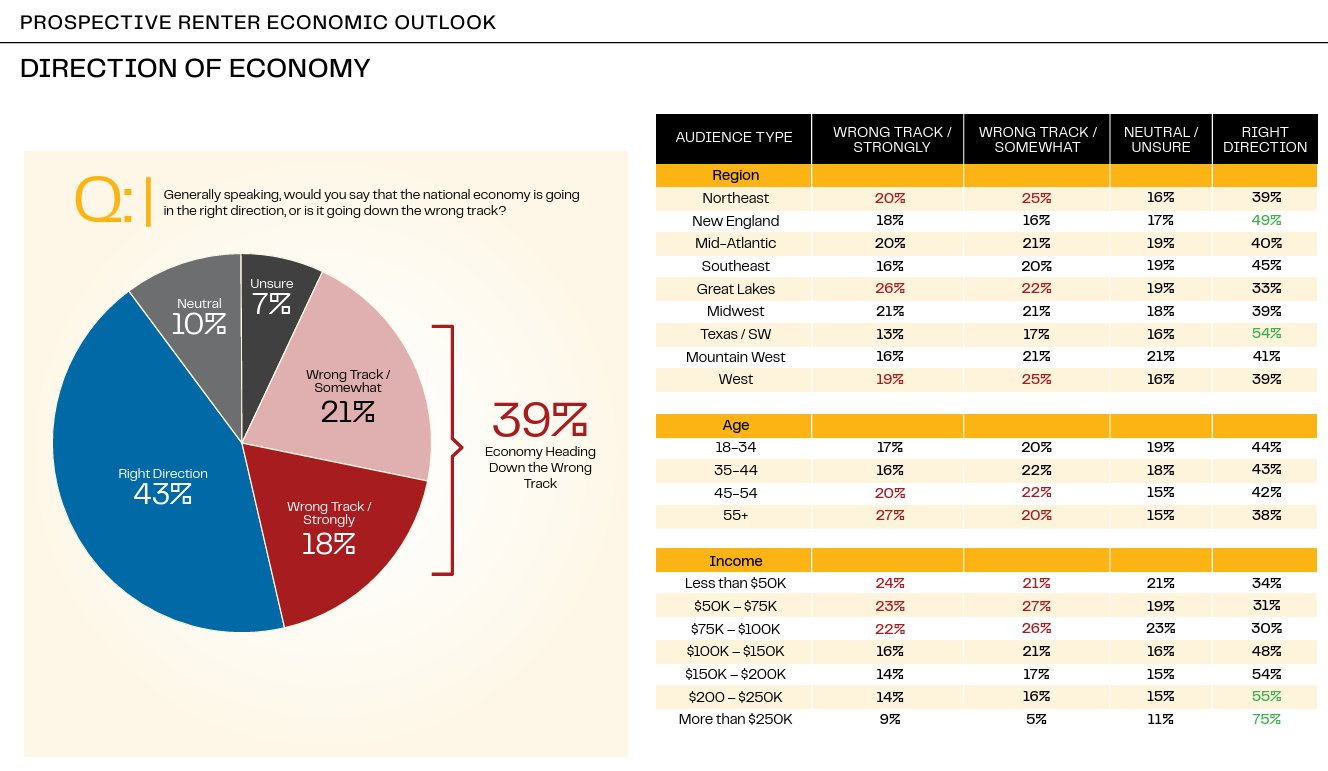
One of the most important questions in any renter demand study is how people feel about the overall economy. In the RCKRBX survey, respondents were deeply split:
When responses are broken down by unit type, a more nuanced story emerges. One-bedroom seekers are the most pessimistic:
By comparison, among two-bedroom renters:
While this level of concern might suggest renters would lower their budgets or renew leases, the survey indicates the opposite trend.
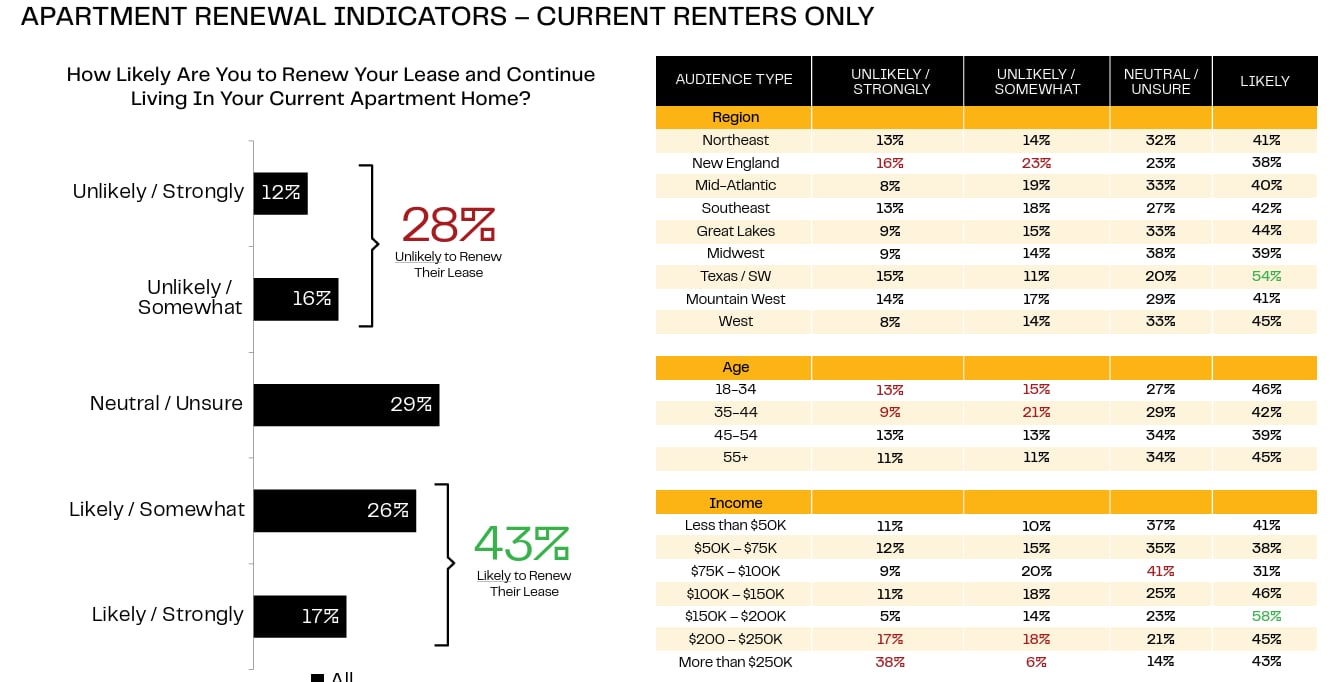
According to RCKRBX, recent economic conditions are encouraging a significant share of renters to rethink their next move:
For multifamily developers and owners, this represents a significant opportunity. Despite economic uncertainty, many renters are willing to pay more for communities that offer space, quality, safety, and lifestyle benefits.
Younger, economically mobile renters are driving this change. They are more willing to explore new neighborhoods and pay premiums for apartments that suit their current lifestyles and work patterns.
A central finding of the National Renter Demand Index is that a large share of renters are putting homebuying plans on hold. When asked why they're renting instead of owning, respondents highlighted several key reasons:
This breakdown reveals two distinct renter segments that multifamily professionals should keep in mind:
For property managers and leasing teams, tailoring marketing, amenity offerings, and resident experience to both segments is critical. Renters, by necessity, will respond strongly to messaging about value, predictability, and security. In contrast, renters by choice are more likely to pay a premium for design, lifestyle, and community programming that reinforce their decision to rent long term.
Since the pandemic, remote and hybrid work patterns have permanently changed where and how many renters spend their time. The RCKRBX survey confirms that flexible work is not a passing trend but a structural shift that is reshaping multifamily housing demand.
The study found that 46% of respondents are hybrid or fully remote workers. The breakdown is as follows:
There are also meaningful differences by age and region:
One of the most important takeaways for developers and operators is that hybrid and remote workers are more likely to pay higher rents when their apartments support work-from-home life.
For this group, the apartment is more than just a place to sleep. It functions as:
Features that appeal to this growing renter segment include:
Forward-thinking multifamily owners are already leaning into next-generation building concepts that blur the line between residential and workspace. Properties that successfully support remote and hybrid work are better positioned to capture rent premiums and higher absorption from this segment of the demand pool.
The RCKRBX survey also underscores a powerful post-pandemic reality: safety and security are now as important as rent levels for many prospective renters.
When asked about their top decision-making factors:
According to the study, safety and security have become the "paramount issue" across markets, often tying with, or even outpacing, rent as the primary deciding factor. This marks a significant shift, introducing both risk and opportunity for multifamily owners and operators.
To stay competitive, communities must:
Crucially, it's not enough to implement safety measures quietly. Properties that highlight security features in marketing materials, tours, and resident communications can better meet renter expectations and justify higher rents in many markets.
Perhaps the most striking insight from the RCKRBX National Renter Demand Index is the gap between existing unit supply and renters' actual preferences, especially regarding unit size.
The study reveals strong, often underserved demand for larger floor plans, even as many markets remain heavy on smaller units:
In short, many markets have oversupplied one-bedrooms, while demand is strongest for two- and three-bedroom apartments that offer more flexibility and space.
The next generation of renters is navigating economic uncertainty, delaying homeownership, and redefining how they use their homes. They expect more space, greater safety, and apartments that double as flexible live-work hubs.
For developers, owners, and managers, the message from the RCKRBX survey is clear: those who realign their strategies with this new renter mindset will be best positioned to outperform in the years ahead.
Communities that succeed will be the ones that:
As multifamily markets continue to evolve, using data-driven insights into renter priorities will be critical. The gap between what is being delivered and what renters truly want is still wide, but for those willing to close it, the opportunity to capture long-term value has never been greater.
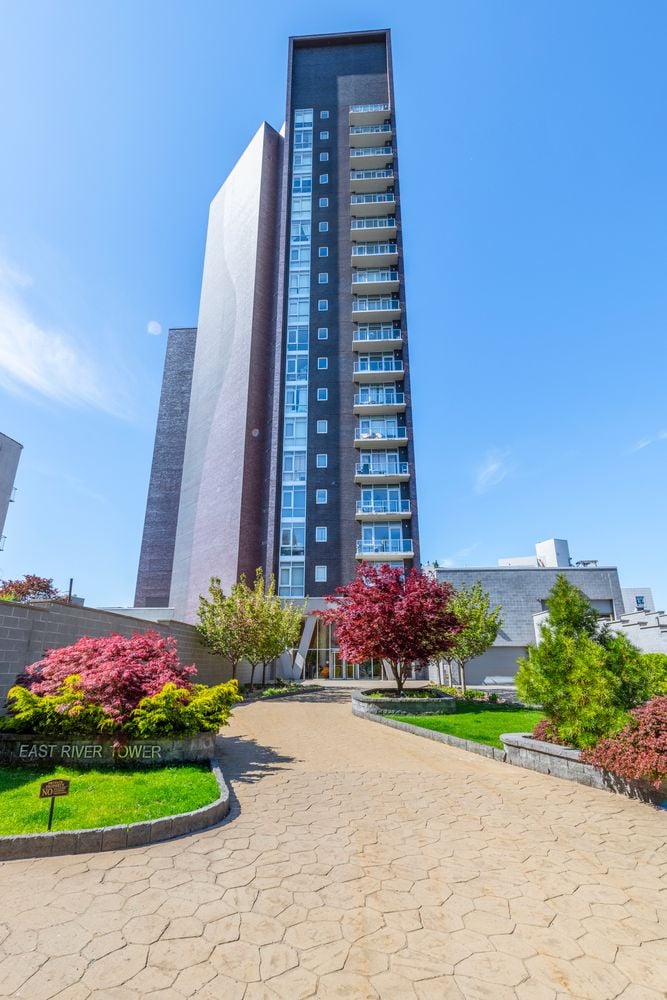
Upgrade your Astoria lifestyle
Darrell Williams works in Manhattan, Brooklyn, Queens, and the Bronx. His expertise includes new development sales/leasing projects, investment sales, and 1st time home buyers. Whether you're purchasing or selling, he'll keep you feeling comfortable and confident from start to end.

Darrell Williams
Compass Headquarters 110 5th Ave 3rd floor New York, NY 10011