Why Overpricing Your NYC Home Is a Costly Mistake in 2026
December 7, 2025
December 7, 2025
Selling your home in New York presents both challenges and opportunities. With informed buyers, extensive listing data, and intense competition, choosing the right price is crucial for a successful sale.
Setting a price too high risks misaligning with market conditions. In this post, I’ll discuss why overpricing is generally not the best strategy.
As of mid-2025, homes in New York City spend a median of ~ 55 days on the market, with slight annual variation.
Zillow reports that in recent measurements, 21.8% of NYC sales closed above list price, and homes had a median days-to-pending (i.e., accepted offer) of 68 days.
According to Realtor.com / FRED, the median “days on market” metric for the broader New York metro area is around 54 days (not seasonally adjusted) in July 2025. (FRED)
The median sale price in NYC is in the ballpark of $870,000, up 6–7 % year over year.
Brooklyn’s median sale price is listed at $999,000, reflecting ~ 7.4% year-over-year growth.
In Brooklyn, the median days on market is ~ 93 days, according to Redfin’s recent data.
Rocket’s June 2025 report shows that of the 492 homes sold that month in Brooklyn:
• 29 % sold within 30 days
• 37 % between 30–90 days
• 34 % lingered beyond 90 days
In the 2nd quarter 2025, Brick Underground noted that days on market in Brooklyn dropped by ~13.8% year over year, a sign that properly priced homes are moving faster.
That said, some sources (like DeFalco Realty) report average days on market in Brooklyn as high as 118 days in May 2025 (up 9.9 % YoY), indicating that many listings remain on the market for extended periods.
Overpricing your home not only delays the sale but also works against your overall goals. Most buyer interest peaks within the first 7-14 days after a listing goes live; if your price is too high, potential buyers may be scared off, causing your home to become "old news quickly." In NYC's relatively fast-paced market, where the average listing lasts around 55 days, a home that lingers can start to feel stale.
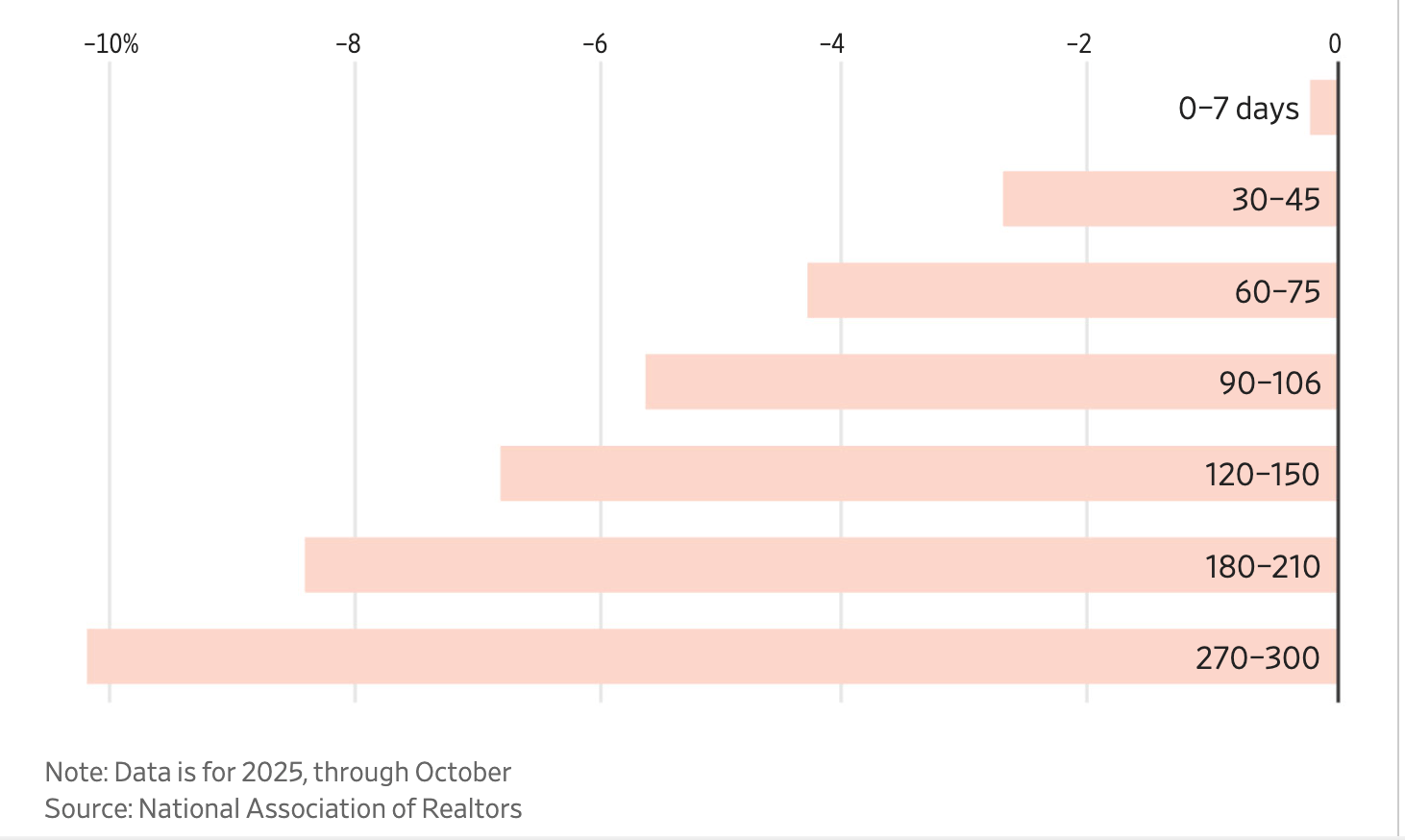
Additionally, when a home sits on the market for too long, buyers often assume there’s something wrong, such as defects, title issues, or inflexible sellers, and overpricing increases this suspicion. Many homes require at least one price reduction to regain interest, but each cut signals desperation, which can lead to more aggressive offers from buyers. I always suggest reductions within the first 30-40 days.
Furthermore, while a buyer may initially agree to your inflated asking price, an appraisal likely won’t match it, forcing a renegotiation or even a financing rejection and jeopardizing your deal. All listing platforms allow buyers to filter homes by price ranges. If your home is priced just above common cutoffs, your ideal buyers may never see it, rendering your listing invisible to serious prospects. Ultimately, a well-priced home attracts multiple buyers, while overpricing can limit interest to only a few unsure parties, resulting in weaker offers.
Imagine a Brooklyn homeowner believes their property is worth $1.1M, while recent comps in the area range from $990K to $1.05M. The seller lists at $1.15M to “see what happens.” This see what happens approach can be a waste of time.
Weeks go by with only a few showings.
After 45 days, they drop the price to $1.07, but by then, buyer perception has shifted.
After 75 days, they drop again to $1.0M.
The final sale price lands at $1.01M, but with extended carrying costs (interest, taxes, utilities) and a weakened negotiating posture.
Had they listed at $1.05M from the start, they might’ve sold in 30–60 days with multiple offers, possibly even exceeding that price through competition, and saved on the unit's carrying costs.
Use hyperlocal comps: Look at recent sales in the same block, building, or small micro-neighborhood (past 3–6 months).
Be realistic, leave negotiating room: Don’t aim for the ceiling. Price slightly below your theoretical top to create urgency.
Monitor early feedback: If showings are weak in the first week or two, consider a modest adjustment.
Stage, photograph, market aggressively: A strong visual presentation supports your price.
Work with an experienced broker who knows your area: Their insight into buyer sentiment and pricing appetite is invaluable.
Overpricing may seem like a bold strategy, but it can often lead to missteps and leaving money on the table. A listing priced too high may sit on the market for too long, attract low offers, or ultimately sell for less after price reductions, all of which can cause unnecessary stress.
In a market where homes in NYC typically sell within 55 days, and Brooklyn listings can be more unpredictable (some selling in as little as 30 days while others take over 90 days), it’s crucial to price your home intelligently. Trusting the comparable sales in your area and setting a competitive price will help you achieve better results.







Darrell Williams works in Manhattan, Brooklyn, Queens, and the Bronx. His expertise includes new development sales/leasing projects, investment sales, and 1st time home buyers. Whether you're purchasing or selling, he'll keep you feeling comfortable and confident from start to end.

Darrell Williams
Compass Headquarters 110 5th Ave 3rd floor New York, NY 10011